Is It Colic, Reflux, or Gas? What’s Normal for Babies and When to Worry
Crying, feeding struggles, and unsettled behavior are among the most common concerns for parents of infants and newborns.
When symptoms persist, families are often told their baby has colic, reflux, or gas.
While these terms are frequently used interchangeably, they describe different experiences—and understanding the difference can bring clarity, reassurance, and direction.
This guide explains infant digestive discomfort through a clinical yet compassionate lens, helping parents understand what’s normal, what supports regulation, and when additional help may be needed.
Why Digestive Discomfort Is So Common in Newborns
Newborn digestive systems are immature at birth. Coordination between the brain, gut, muscles, and nervous system continues to develop over the first several months of life.
During this time, babies may struggle with air intake during feeds, efficient digestion, and self-soothing.
Crying related to digestive discomfort often peaks between 6–8 weeks of age and gradually improves by 3–4 months. Learning why movement is essential for your baby’s brain development can help parents understand how physical organization and nervous system regulation play a role in comfort and digestion.

What Is Colic?
Colic is defined clinically using the “Rule of Threes”: crying for more than three hours per day, on more than three days per week, for more than three weeks, in an otherwise healthy infant.
Common Characteristics of Colic
Intense, prolonged crying that is difficult to soothe
Crying episodes often occur in the late afternoon or evening
Physical signs such as clenched fists or legs drawn toward the abdomen
Normal feeding, growth, and medical exams
Colic does not indicate poor parenting or long-term developmental concerns. While the exact cause is unknown, colic is thought to be related to nervous system immaturity, sensory overload, and challenges with self-regulation.
Gentle, body-based strategies—such as passive prone as a daily exercise for infants—can sometimes support regulation and comfort.
Understanding Infant Reflux
Reflux occurs when stomach contents flow backward into the esophagus. This is extremely common in infants due to anatomical immaturity and liquid feeding patterns.
Physiological Reflux
Most babies experience normal reflux, often called “happy spit-up,” which includes:
Frequent spit-up
Minimal distress
Normal weight gain
These babies typically do not require medical treatment.
When Reflux Needs Evaluation
Reflux may warrant further assessment if accompanied by:
Poor weight gain
Persistent distress during feeds
Feeding refusal
Blood in spit-up
Positioning and feeding mechanics are often the first place to start. Parents may benefit from learning about promoting airway health and healthy nasal breathing, as feeding, breathing, and sleep are closely connected in infants.
For medical guidance, the American Academy of Pediatrics guidelines on infant reflux and spit-up provide evidence-based reassurance on what is typical and when to seek care.
What Is Gassiness in Babies?
Gas is usually caused by swallowed air during feeds or difficulty moving air through the digestive tract. Unlike colic, gas-related discomfort is typically short-lived and improves with physical support.
Common Signs of Gas
Squirming or grunting
Pulling knees toward the chest
Fussiness relieved by passing gas or burping
Improving feeding mechanics can help. Many families find relief by adjusting latch, bottle flow, or feeding pace.
Resources like Lactation: The Ultimate Guide to Confident and Healthy Breastfeeding can help parents better understand how feeding efficiency impacts comfort.

How to Tell the Difference Between Colic, Reflux, and Gas
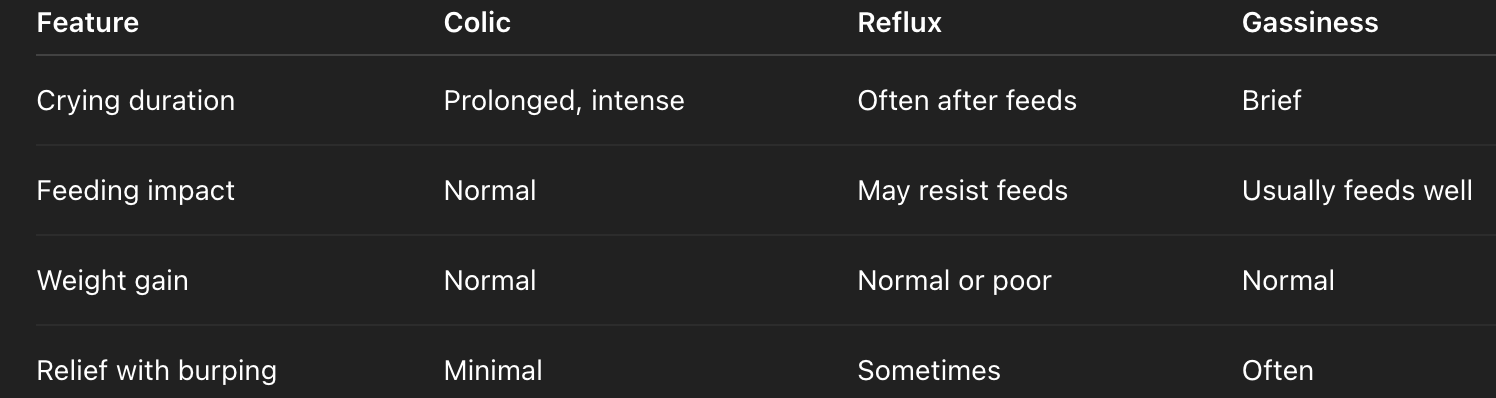
When symptoms overlap or feel unclear, additional factors—such as sensory processing—may contribute. Learning about helping kids with sensory-based feeding differences can be especially useful when feeding challenges extend beyond infancy.
Evidence-Based Ways to Support Digestive Comfort
Feeding Support
Feed in a semi-upright position
Use a nipple flow that matches your baby’s pace
Pause feeds for frequent burping
Bottle-fed babies may benefit from paced bottle feeding, which reduces air swallowing and improves regulation.
Body-Based Regulation Strategies
Movement and positioning support digestion and nervous system organization. Incorporating gentle exercises, tummy-down positioning while awake, and responsive handling can help babies feel more regulated.
Parents often notice improved comfort when feeding and movement are aligned with their baby’s cues rather than rigid schedules.
When Crying May Signal Something More
While most digestive discomfort is benign, parents should seek medical guidance if their baby shows:
Poor weight gain
Blood in stool or spit-up
Persistent vomiting
Lethargy or fever
Concerns about food intolerance may lead families to explore milk protein allergy symptoms, which differ from typical colic.

Supporting Parents Through Infant Digestive Challenges
Caring for a baby who cries frequently can be emotionally exhausting. Feelings of uncertainty, frustration, or self-doubt are common—and valid.
Support from knowledgeable professionals and trusted resources can make a meaningful difference for both parent and child.
Digestive challenges in infancy are often temporary. With time, maturation, and responsive support, most babies grow out of colic, reflux, and gassiness as their systems develop.
If you’re navigating colic, reflux, or gas, know this: your baby is not broken, and neither are you.
Understanding what’s normal—and when to seek help—can restore confidence and calm during an otherwise overwhelming season.
Read more articles from b.well tots