Signs of Sensory Overload vs Typical Fussiness
As pediatric therapists, one of the most common questions we hear is:
“Is this just normal fussiness—or is my child overwhelmed?”
All children fuss. All children cry. Emotional expression is part of healthy development. But when a child’s nervous system becomes overloaded by sensory input, their reactions can look very different from typical frustration or fatigue.
Understanding the difference between sensory overload and everyday fussiness helps parents respond with clarity instead of confusion and to support regulation more effectively.
This post is part of our broader sensory processing framework explored in Understanding Sensory Processing for Little Ones.
What Is Typical Fussiness?
Typical fussiness is developmentally expected. It often occurs when a child is:
Hungry
Tired
Frustrated
Bored
Transitioning between activities

Characteristics of typical fussiness:
Trigger is identifiable
Reaction is proportional
Child can be soothed with comfort, distraction, or routine
Recovery happens relatively quickly
Typical fussiness reflects an immature BUT functioning regulation system.
What Is Sensory Overload?
Sensory overload occurs when the nervous system receives more input than it can effectively process.
Sensory input includes:
Noise
Light
Touch
Movement
Crowds
Clothing textures
Smells
Visual clutter

When overwhelmed, the nervous system shifts into a fight, flight, or freeze response.
At this point, behavior is not voluntary, it is protective.
Key Differences: Sensory Overload vs Typical Fussiness
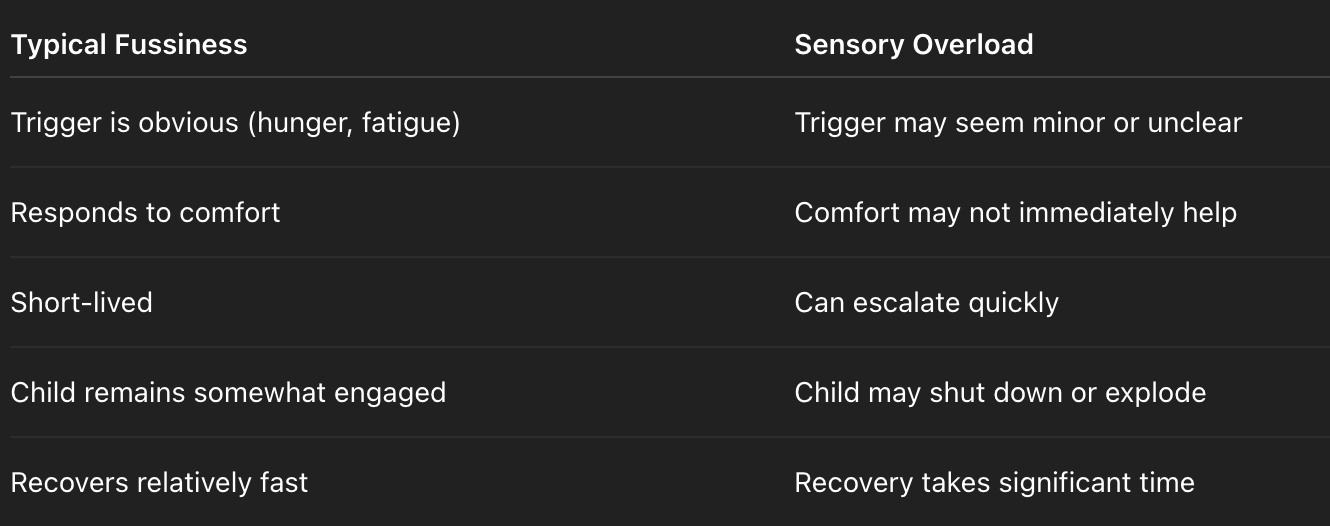
The most important difference?
Sensory overload involves nervous system dysregulation—not simply emotion.
Common Signs of Sensory Overload
Emotional Signs
Intense meltdowns out of proportion to the situation
Panic-like reactions
Aggression or sudden withdrawal
Difficulty calming even with support
These patterns connect closely with broader regulation skills discussed in social-emotional regulation across early years from newborn cues to preschool self-control.
Physical Signs
Covering ears or eyes
Stiffening or collapsing
Increased clumsiness
Rapid breathing
Flushed skin
Movement and posture shifts often signal nervous system activation. Understanding why movement is essential for your baby’s brain development helps explain how regulation and body organization are intertwined.
Behavioral Signs
Avoiding busy environments
Fear of playground equipment
Difficulty with transitions
Repetitive or rigid play
If play feels limited or overly repetitive, it may help to revisit language emergence and early play: how play patterns predict communication growth, since play and regulation are deeply connected.
When Is It Just a Phase?
Many young children go through temporary sensitivities—especially during growth spurts or developmental leaps.
Consider typical development if:
Sensitivities are short-term
Triggers are predictable
Child continues progressing in other areas
Regulation improves gradually
But when patterns are persistent and interfere with daily life, further evaluation may be helpful.
Why Sensory Overload Is Often Misinterpreted
Children experiencing sensory overload may be labeled as:
“Too sensitive”
“Overreacting”
“Difficult”
“Attention-seeking”
In reality, their nervous systems may be processing input differently. Sensory overload is not behavioral defiance—it is neurological overwhelm.

Practical Ways to Support a Child Experiencing Sensory Overload
-
Lower noise, dim lights, and decrease visual clutter.
-
Deep pressure hugs (if tolerated), pushing against a wall, or carrying weighted objects can help calm the nervous system.
-
Many overload episodes happen during shifts. Build in warning time and predictability.
-
Keep note of:
Time of day
Environment
Sensory triggers
Duration of recovery
Patterns reveal more than isolated events.
-
When a child is overloaded, logic won’t work. Regulation must come first.
When to Seek Professional Support
Consider a pediatric occupational therapy evaluation if:
Meltdowns are intense and frequent
Recovery takes prolonged time
Sensitivities limit participation
Play feels rigid or avoidant
Regulation challenges overlap with feeding or motor concerns
Families unsure where to start may find clarity in holistic pediatric wellness: a guide to trusted providers.
If you’re unsure whether your child’s behavior reflects sensory overload or typical fussiness:
-
Look for intense reactions, difficulty calming, physical signs like covering ears, and prolonged recovery after minor triggers.
-
Temporary overwhelm can happen in toddlers, but persistent or extreme reactions may signal sensory processing differences.
-
Yes. Overload often appears as aggression, defiance, or shutdown—but it is rooted in nervous system dysregulation.
-
Some children develop improved tolerance as their nervous systems mature. Others benefit from targeted support.
-
If sensory challenges interfere with daily life, learning, feeding, or social participation, evaluation can provide clarity.