How Oral Motor Growth Connects to Broader Motor Skills
Feeding is often viewed as a basic survival task, but in infancy and early childhood, it is one of the most complex developmental skills a child learns.
Feeding requires coordination between the mouth, body, sensory systems, and nervous system. When feeding challenges arise, they are often connected to a child’s broader motor development and not just what is happening in the mouth.
Understanding how oral motor growth connects to developmental milestones can help parents better support feeding, movement, and long-term functional skills with confidence and clarity.
What Are Oral Motor Skills?
Oral motor skills involve the strength, coordination, and timing of the muscles of the lips, tongue, jaw, cheeks, and soft palate.
These skills are essential for:
Sucking, chewing, and swallowing
Managing food textures safely
Speech development
Breathing coordination
Importantly, oral motor skills rely on whole-body stability.
Feeding does not occur in isolation but built on a foundation of posture, head control, and nervous system regulation. This is why feeding challenges frequently overlap with delays in movement or coordination.

Stability Comes Before Skill in Development
A foundational concept in child development is that stability develops before mobility and refinement.
For feeding, this means:
Core and trunk stability support head and neck control
Head and neck control support jaw stability
Jaw stability allows refined tongue and lip movement
When a child struggles with posture or endurance, feeding may feel effortful. Learning why movement is essential for your baby’s brain development helps explain how body organization directly influences feeding success.
How Feeding Skills Develop Alongside Motor Milestones
Newborn to 3 Months: Reflexes and Regulation
In the earliest months, feeding relies on reflexive patterns supported by whole-body flexion and caregiver positioning.
During this stage:
Sucking and swallowing are reflex-driven
Head control is emerging
Feeding supports nervous system regulation
When infants lack support through the trunk or neck, feeding can lead to fatigue or inefficient sucking. Gentle movement experiences, such as passive prone as a daily exercise for infants, can help build early postural foundations.
4–6 Months: Head Control and Feeding Readiness
As babies gain head and upper-trunk control, feeding becomes more voluntary.
This stage often includes:
Increased oral exploration
Interest in hands at the mouth
Early readiness for spoon feeding
Without adequate postural support, babies may struggle to manage purees or show stress during feeds. Feeding readiness is about body control not just age.
6–9 Months: Sitting and Texture Progression
Independent or supported sitting is a major milestone for feeding development.
During this period:
Jaw movements shift toward early chewing
Tongue lateralization begins
Babies explore thicker textures and soft solids
If sitting stability is limited, children may compensate with jaw clenching or tongue thrusting. These patterns are often misunderstood as “feeding issues” rather than postural ones.
Parents navigating feeding transitions may benefit from Lactation: The Ultimate Guide to Confident and Healthy Breastfeeding, which explains how feeding mechanics evolve with development.
If feeding feels confusing or stressful right now, you don’t have to figure it out alone.
9–12 Months: Coordination Across Systems
As crawling and transitional movements emerge, feeding skills also become more coordinated.
Children typically:
Manage mixed textures
Improve biting and chewing control
Use fingers more precisely during meals
This stage highlights the connection between fine motor skills (grasping food) and oral motor skills (managing food safely in the mouth).
Toddler Years: Integration and Endurance
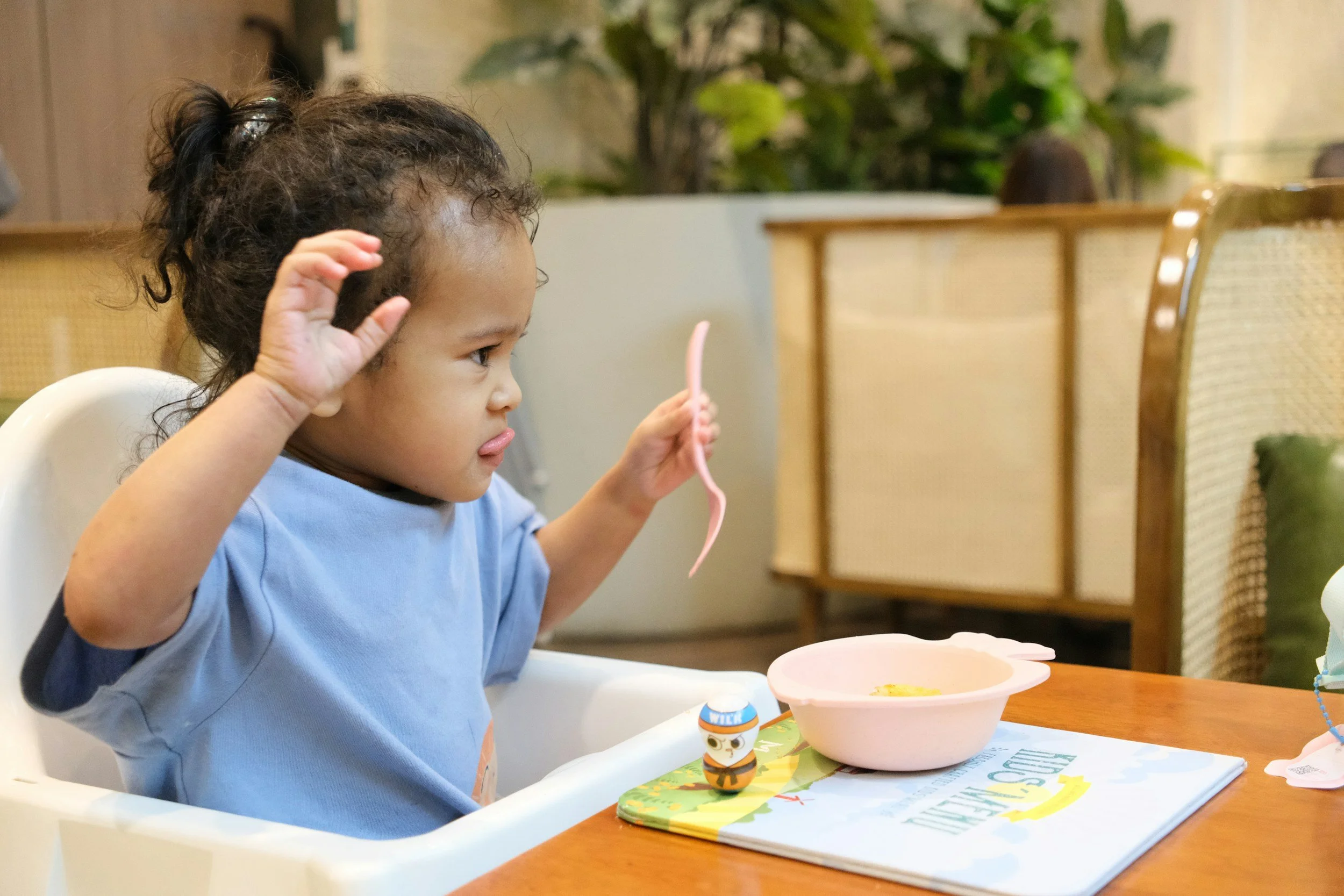
In toddlerhood, feeding requires:
Postural endurance to sit through meals
Bilateral coordination for utensils
Advanced chewing and swallowing
Children with sensory processing differences may continue to struggle. Learning about helping kids with sensory-based feeding differences can support families navigating ongoing challenges.
Why Feeding and Motor Delays Often Occur Together
Feeding challenges are often part of a broader developmental picture.
Common contributors include:
Low muscle tone affecting posture and endurance
Sensory processing differences impacting body awareness
Nervous system immaturity affecting coordination
Because feeding, movement, and regulation are interconnected, addressing only the mouth may miss the root cause.
The Role of Sensory Processing in Feeding and Movement
Feeding is one of the most sensory-rich activities in early life.
It involves:
Tactile input from food textures
Proprioceptive input through jaw pressure
Vestibular input from head and body position
Children who struggle with regulation may fatigue quickly, gag easily, or resist textures. These same challenges often affect sleep and breathing, making resources like promoting airway health and healthy nasal breathing especially relevant.
When Feeding Challenges May Signal a Need for Support
Consider additional guidance if feeding challenges occur alongside:
Difficulty sitting upright
Delayed rolling, crawling, or walking
Stressful or prolonged meals
Limited texture progression

Families exploring next steps may find clarity through holistic pediatric wellness: a guide to trusted providers, which outlines multidisciplinary support options.
If you’re unsure what type of support would be most helpful, you can explore the B.well tots provider pages to learn more about feeding specialists, occupational therapists, and developmental professionals available to support your child.
-
Feeding skills rely on posture, head control, sensory input, and coordination. Delays in gross or fine motor skills can affect oral motor control, making feeding more difficult.
-
Yes. Core stability supports head and jaw control. Without it, children may fatigue quickly, chew inefficiently, or struggle with textures.
-
Yes. Feeding and motor skills develop together. It’s common for challenges to appear across multiple areas, especially when sensory processing is involved.
-
If feeding challenges persist alongside delayed movement, poor endurance, or stressful meals, a developmental evaluation may be helpful.
-
Absolutely. Supporting posture, movement variety, and regulation often improves feeding efficiency and comfort.
Read more from us