
Is getting out the door turning into a full-body wrestling match now that it's cold? It's 8:40 on a gray Philly morning. You've got the coat in one hand and a boot in the other, one mitten is already under the couch, and your toddler is flopped on the floor like their bones just melted, even though they were begging to go to the playground five minutes ago. You're not doing anything wrong, and your kid isn't just being stubborn.
Getting dressed for winter is honestly one of the hardest "jobs" we ask of toddlers and preschoolers all year. It takes balance, body awareness, hand strength, planning, and sensory tolerance, usually right when everyone is rushing. Here at B.well, watching a child get dressed tells us a lot about how their whole body is working together.
Why Winter Gear Is Such a Big Ask
Think about what a puffy coat, boots, hat, and mittens actually ask a two- or three-year-old to do. They have to stand on one foot or sit and push against a stiff boot, find two arm holes they can't see behind their back, get a thumb into the right spot inside a mitten with no fingers to guide it, and then tolerate a hat squeezing their ears. That's a lot of steps in a row, and OTs call the skill of planning and sequencing new movements motor planning (or praxis). Kids who are still building motor planning often look "uncooperative" when really they don't know where to start.
There's a body-awareness piece, too. Feeling where your arm is inside a thick sleeve depends on proprioception, the sense that comes from your muscles and joints. We explain it in What Is Proprioception?. Layers muffle that feedback, so a child who's a little less sure of their body to begin with can feel clumsy and frustrated once they're bundled. And if balance is the sticking point (tipping over every time a boot goes on), that's often worth a look from both an OT and a PT, which we talk about in Is My Toddler Just Clumsy?
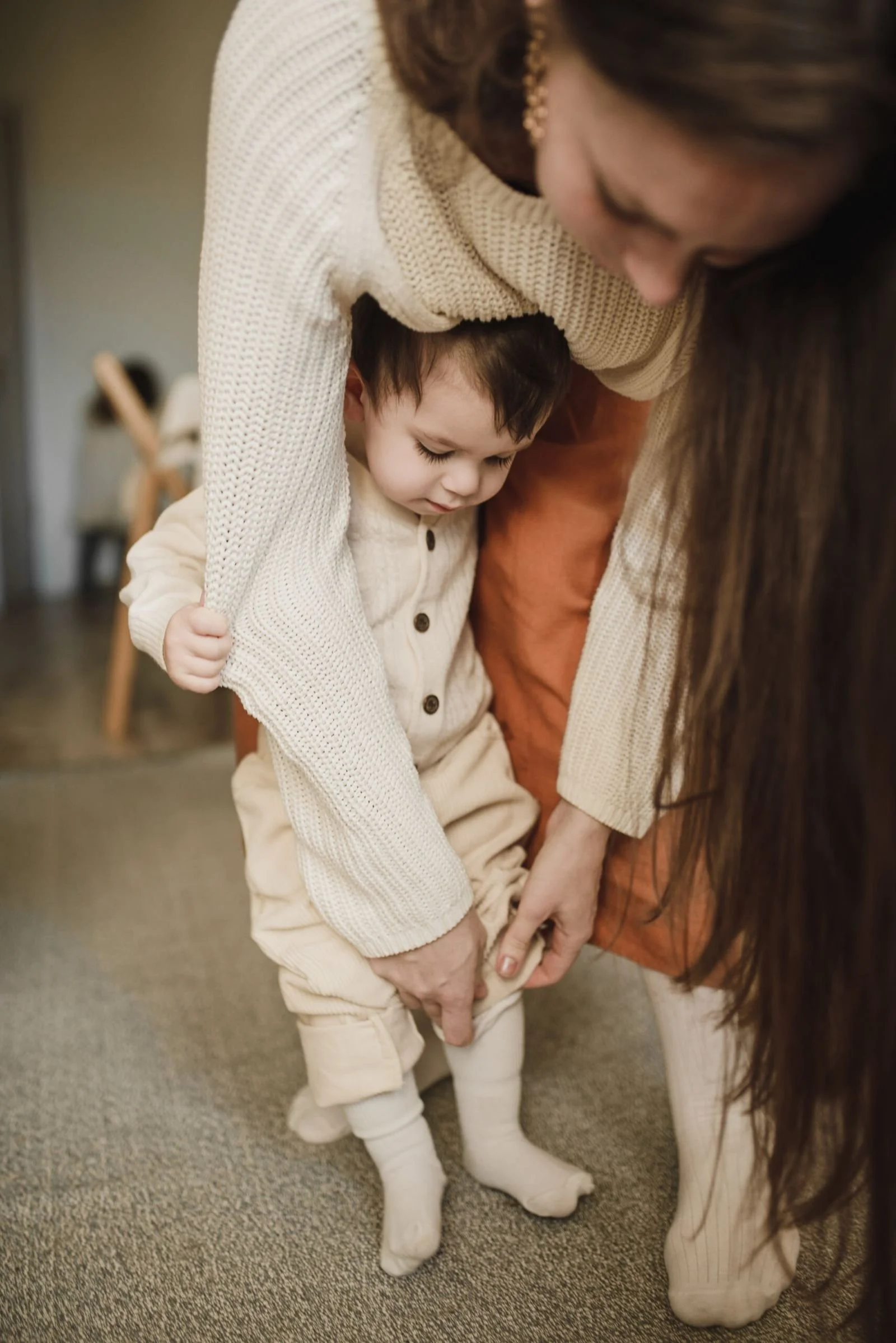
Sometimes It's the Clothes Themselves
Then there's how winter clothes feel. Sock seams that twist inside a boot, a scratchy collar, a tight cuff at the wrist, a hat pressing on the ears, the swishy sound of a snowsuit: for some kids those sensations are background noise, and for others they're the loudest thing in the room. A child who melts down over boots every day may be telling you something real about how that boot feels. If your toddler is also bothered by noise or messy hands, Signs of Sensory Overload vs Typical Fussiness is a helpful read.
Getting dressed is also a transition. Stopping a game and switching into "go" mode is hard for a lot of little nervous systems, especially when the grown-up is (understandably!) stressed about being late.
Tips That Make Winter Dressing Easier
These are some of our favorite strategies to try at home:
Try the coat flip. Lay the coat open on the floor, upside down, with the hood at your child's toes. They slide their arms into the sleeves and flip it over their head. It feels like a magic trick and skips the "find the sleeve behind your back" step.
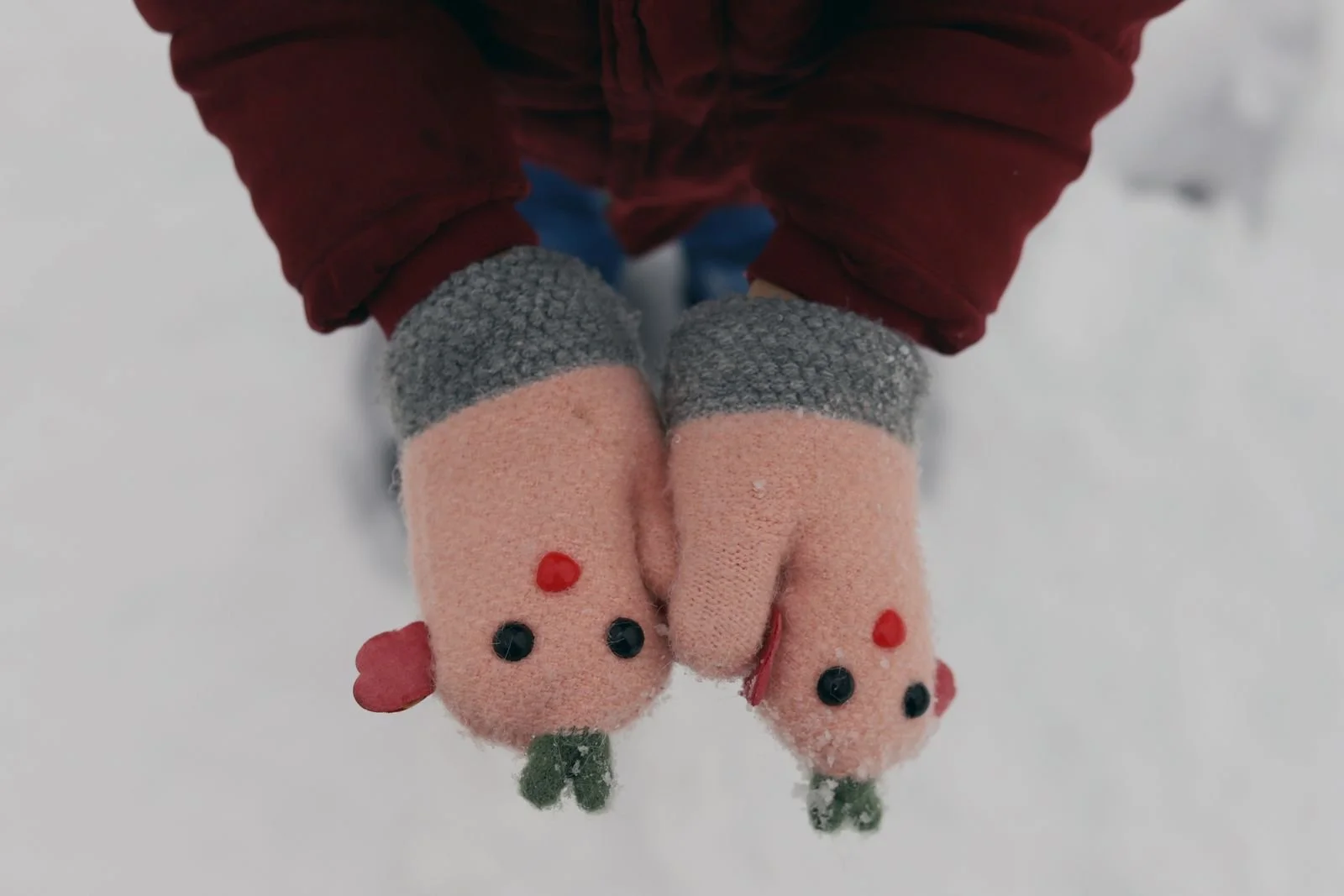
Mittens first, then coat. Put mittens on before the coat so the cuffs tuck inside the sleeves. Mittens with one big space for the fingers are much easier than gloves for small hands.
Give them a low seat for boots. Sitting on the bottom stair or a sturdy step stool, with feet flat, makes pushing into boots much easier than standing.
Check the feel. Try seamless socks, tag-free layers, and a soft neck warmer instead of a scarf, and pull socks smooth before boots go on.
Keep the order the same every day. Snow pants, boots, coat, hat, mittens, in a basket by the door. Predictable steps take the guesswork out.
Add some heavy work first. A few wall pushes or carrying the boots to the door can help some kids feel more organized before you start.
One car-seat reminder while we're talking coats: buckle your little one in without the puffy coat, then lay the coat (or a blanket) over the straps once they're snug.
Wondering if the daily coat battle is about more than winter?
When It's Worth a Closer Look
Lots of toddlers fight their coats, and most of it is plain old toddlerhood. It's worth checking in if dressing is a big struggle every day, not just in winter; if your preschooler still can't get started on simple steps like pushing an arm into a sleeve or pulling up pants; if clothing textures lead to big, hard-to-recover meltdowns; or if your child seems to fall, trip, or lose balance much more than other kids their age. None of these is a diagnosis, but a cluster of them is a good reason to check in.
Our pediatric occupational therapists look at motor planning, fine motor skills, sensory processing, and regulation together, and our physical therapists dig into balance, strength, and coordination. To a toddler it just looks like play, but we're building the exact skills dressing depends on.
Tried a few of these and mornings are still a battle?
Why a Daytime Session Can Help
Here's the funny thing about dressing: it's really hard to work on at 8:40 a.m. when everyone needs to leave. That's why we love daytime sessions for this. A mid-morning or early afternoon visit at our Fishtown (2011 N. Front St.), Fairmount (2000 Hamilton St., Ste 304), or Wyndmoor (1100 E. Mermaid Lane) office, or a home visit, lets us practice the coat flip, the boots, and the tricky mitten thumb when nobody is rushing. We see exactly where your child gets stuck, and you leave with a plan that fits your kid and your front door. Nannies and caregivers who do the morning routine are always welcome to come and learn too.
And that toddler melted on the floor next to one lost mitten? For a lot of families, the first win is simply a coat that goes on without tears, thanks to a little magic flip. If you'd like help figuring out what's underneath your child's winter dressing battles, you can book a 15-min virtual consult. We'd love to help you get out the door this winter (mittens and all)!
This post is for educational purposes and isn't a substitute for individualized medical advice.