
Your newborn's arms fly out in the bassinet at 2 a.m. A few weeks later, she's rooting at the burp cloth twenty minutes after a full feed. Fast-forward a couple of years, and you're watching the same kiddo trip over a curb on the way into a Philly playground. These moments can feel like three different stories. Here at B.well tots, we often start in the same place with all of them: the early movement patterns your child was born with, called primitive reflexes.
What Primitive Reflexes Actually Are
Primitive reflexes are the automatic movements babies come into the world with. They don't have to be taught, and your baby isn't choosing them. These patterns have real jobs early on: helping a newborn find food, stay protected, and start moving.
As the nervous system matures, another set of patterns starts to take the lead. These are often called postural reflexes, or righting and equilibrium reactions. They help a baby lift and turn their head, catch themselves when they tip, and stay balanced as they roll, sit, crawl, and walk. Primitive reflexes are the starting toolkit; postural reflexes help your child stay upright as movement gets more complex. Together, they're one piece of the foundation under feeding, moving, and regulation, not the whole story.
The Primitive Reflexes We Commonly Look At
Here are the primitive reflexes we talk about most often in pediatric therapy, in plain language. These patterns usually quiet over the first year as more controlled movement takes over, each on its own timeline.
Moro (startle) reflex. When a baby is startled by a sudden movement, sound, or the feeling of falling, their arms fly out and then come back in toward the body. We go deeper on this one in Why Does My Baby Throw Their Arms Out?.
Rooting reflex. When something brushes a baby's cheek or the corner of their mouth, they turn toward it and open their mouth, which helps a newborn find the breast or bottle.
Sucking reflex. When something touches the roof of the mouth, the tongue and jaw start working in a rhythm. Together with rooting, this is a big part of early feeding.
Palmar grasp reflex. When something is placed in a baby's palm, the fingers close around it. That's the surprisingly tight grip on your finger, and later, sometimes, your hair.
Plantar grasp reflex. When the ball of the foot is touched, the toes curl down. It's a cousin of the palmar grasp, just in the feet.
Asymmetrical tonic neck reflex (ATNR). Sometimes called the "fencing" reflex. When a baby turns their head to one side, the arm and leg on that side tend to straighten, and the opposite arm and leg tend to bend. This pattern shows up a lot in early reaching and rolling.
Symmetrical tonic neck reflex (STNR). This one links head position with the arms and legs. When the head tips up, the arms tend to straighten and the legs bend; when the head tucks, the arms tend to bend and the legs straighten. It often comes up when we look at rocking and crawling.
Tonic labyrinthine reflex (TLR). Tied to head position and the pull of gravity. In some positions the body tends to extend or straighten; in others it tends to curl or flex. This can affect how a baby holds themselves against gravity.
Spinal Galant reflex. A stroke along one side of the lower back causes the trunk to curve toward that side. It plays a role in early rolling and hip movement, and you may notice a big wiggle during a diaper change.
Landau reflex. This one usually becomes easier to see as babies spend more time on their tummies. When a baby is on their belly, or held facing down, the head, chest, and legs tend to lift, a little like swimming or "superman."
Babinski reflex. When the sole of a baby's foot is stroked, the big toe often goes up and the other toes fan out. Like the other early foot patterns, this usually changes as walking skills develop.
Fear Paralysis Reflex. You may also hear this term in some reflex-integration approaches. It's used to describe a freeze-like response to a sense of threat or overwhelm. It isn't a medical diagnosis, and we mention it because families ask about it, not because it's the explanation for every shutdown or startle.
How Primitive Reflexes Usually Soften Into Skills
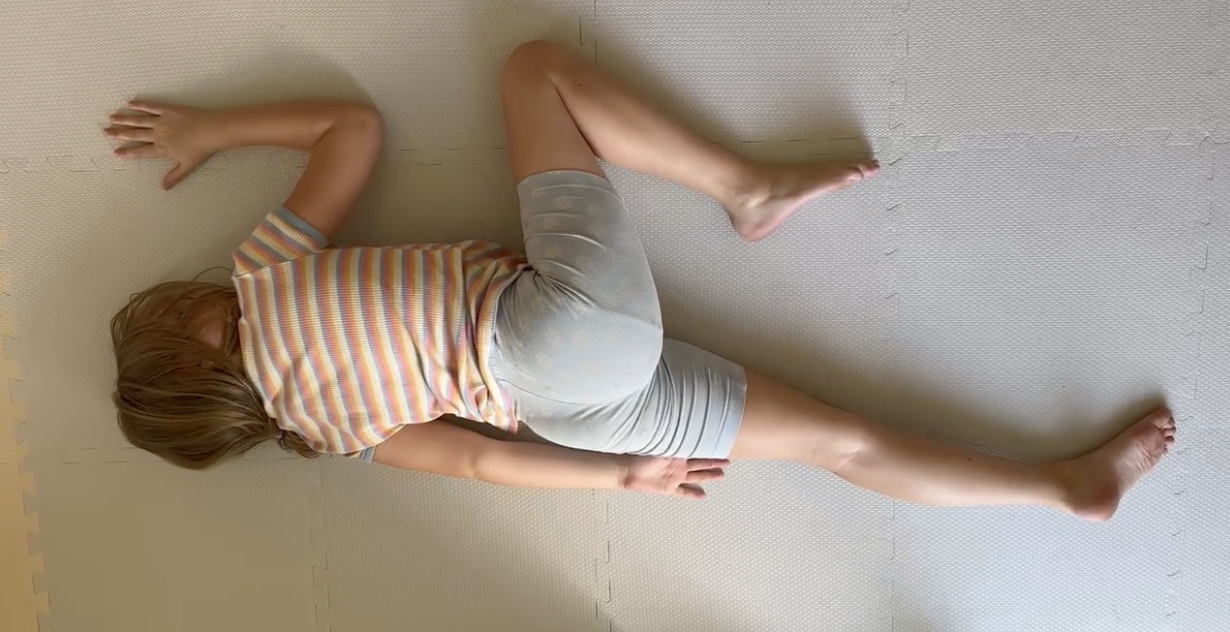
You may hear therapists talk about "integration." In plain words, that just means the automatic pattern gets quieter as your child takes over with movement they can control. With lots of floor play, those early patterns move into the background so your child can reach, roll, chew, and catch themselves on purpose.
When Early Patterns Stick Around
Sometimes traces of those early patterns stay more active than we'd expect for a child's age. People often call this a "retained" reflex. It is not a diagnosis.
When a reflex is still more in the driver's seat than we'd like, a child may be working against their own automatic responses. Feeding can stay hard, a startle can stay very big, and movement can take extra effort, which we talk about in When Moving Takes Extra Effort: DCD, Coordination, and Retained Reflexes. For some toddlers, it just looks like clumsiness. Retained primitive reflexes are one piece of the picture, not the whole picture. Sensory processing, body awareness, muscle tone, practice, sleep, and regulation all matter too. An Instagram checklist is not an evaluation. If something is nagging at you, it's worth a closer look.
Wondering whether primitive reflexes might be part of what you're seeing?
Why Primitive Reflexes Are Part of Our Approach at B.well tots
A calmer, more connected family starts with seeing the whole child, and the whole family, beyond the checklist. That's why primitive reflexes have a place here without becoming the only thing we talk about.
A reflex never shows up by itself. It travels with feeding, breathing, posture, play, and how your child settles. Treating a pattern in isolation misses the point. Primitive reflexes are also one window into how a child's nervous system organizes itself. When the body is working hard just to feel safe or stay upright, meals, the playground, and bedtime all get harder.
We treat parents as partners, too. You know your child best. Our job is to help you make sense of what you're seeing, not hand you a list of drills. That's also how pediatric occupational therapy and physical therapy work here. We watch function: how your child eats, moves, and handles a regular Philly day, not just how they do on a reflex test. For some children, we look at primitive reflexes as part of a focused stretch of therapy in our Neuro.well intensives in Wyndmoor. That work sits inside the same whole-child picture, and it isn't a cure.
Signs Worth a Closer Look
Most of what you'll see in the first months is a baby being a baby. What we pay attention to is a pattern over time:
A startle that stays very big, or looks very different on one side. If it is clearly one-sided, don't wait to have your baby checked.
Feeds that stay hard work: a shallow latch, a baby who tires out, or a lot of clicking and leaking. We go deeper on that in Is My Baby Still Hungry? Rooting, Sucking, and Your Baby's Feeding Reflexes.
A strong preference for one side, or floor play that only works in one position
A toddler or preschooler who startles easily, tires quickly on the playground, or seems to fight their own body to sit, get dressed, or use a crayon
Movement that takes noticeably more effort than it does for other kids the same age
Emotional regulation challenges, or a child that is very easily frustrated
Handwriting and fine motor difficulties
None of these is a diagnosis. One or two on a tired day usually isn't a worry. A cluster of them is a good reason to check in.
Simple Ways to Support These Patterns at Home
You don't need to test primitive reflexes at home. Play does most of the useful work:
Lots of awake floor time, with toys offered on both sides so your baby turns both ways
Short, supported tummy time, or side-lying play if tummy time is still a fight
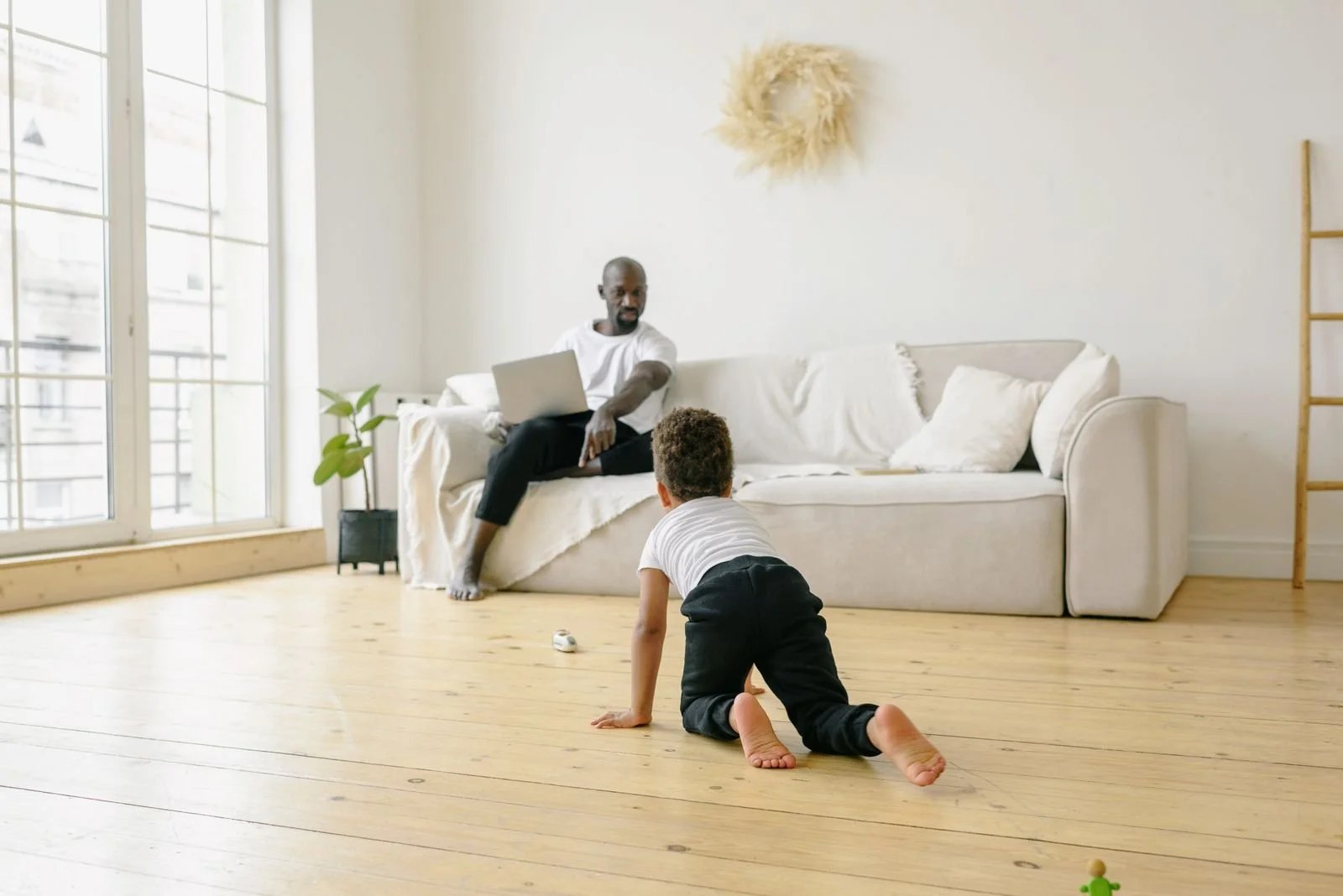
Rolling, crawling, and climbing play: couch-cushion tunnels, hallway races, and time off the bouncer
For toddlers, pushing, carrying, and other heavy work, which we talk about in What Is Proprioception?
Slowing down transitions and giving the body a minute to settle after a startle or a busy outing
Stop if your child is upset, and keep it playful.
Tried a few of these and still have questions?
A Closer Look, With Your Family in the Room
Sessions at our Fishtown (2011 N. Front St.), Fairmount (2000 Hamilton St., Ste 304), and Wyndmoor (1100 E. Mermaid Lane) offices let us see your child at their best. Families come from Northern Liberties, Chestnut Hill, Mount Airy, and beyond. Nannies and caregivers are welcome.
If you'd like a second set of eyes, you can book a 15-min virtual consult. We'd love to meet you and your little one.
This post is for educational purposes and isn't a substitute for individualized medical advice.