Language Emergence and Early Play: How Play Patterns Predict Communication Growth
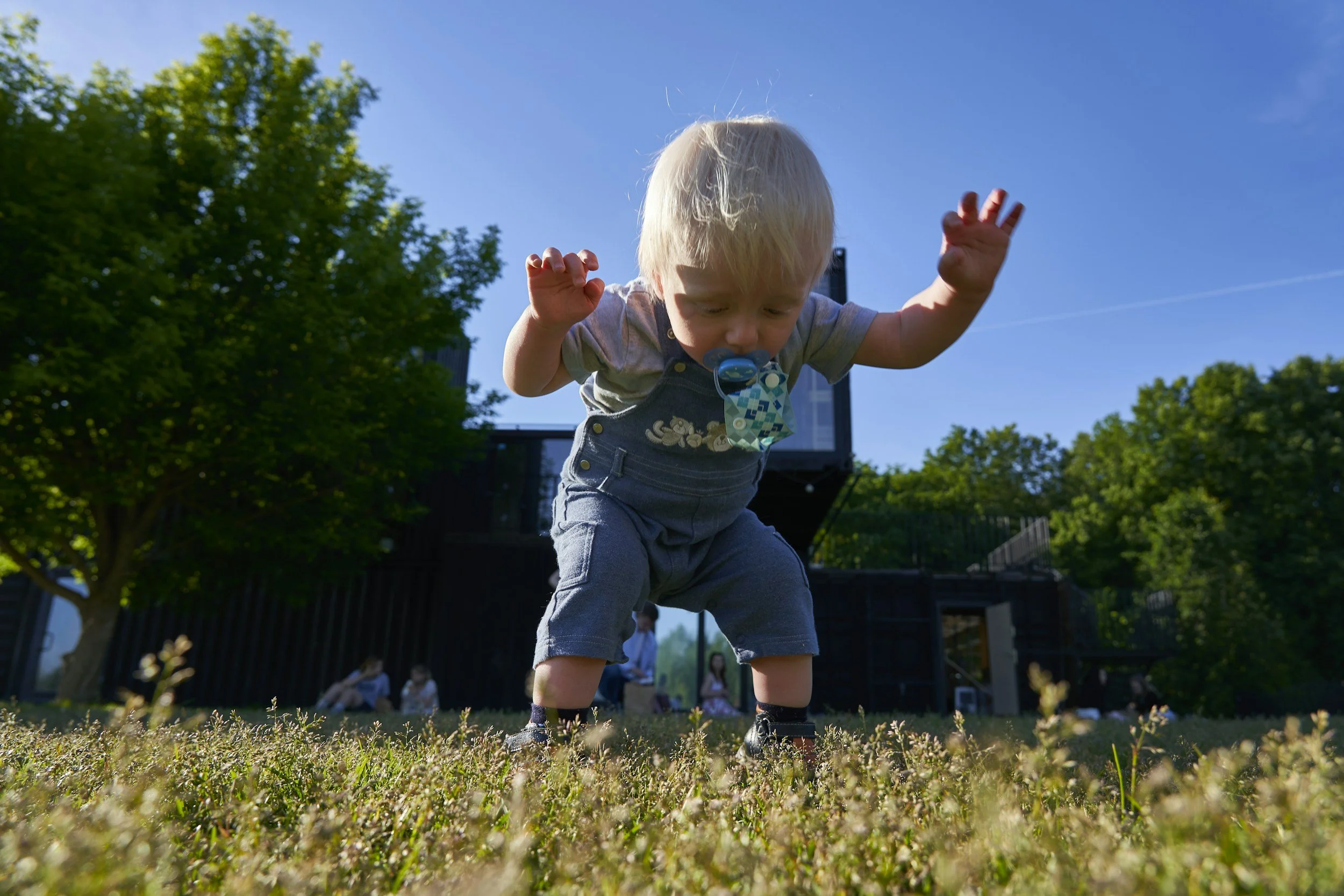
As pediatric therapists, we often remind families that language does not begin with words.
It begins in the body—through movement, connection, sensory exploration, and play.
Long before a child speaks, their play patterns give us powerful insight into how communication is developing beneath the surface.
From my perspective as a lead therapist in a pediatric holistic wellness clinic, early play is one of the most reliable windows into a child’s emerging language skills.
When we understand what play is telling us, we can support communication growth in ways that feel natural, joyful, and developmentally appropriate.
Why Play Is the Foundation of Language Development
Play is not “extra” or optional—it is how young children learn to organize their nervous systems, explore cause and effect, and build the foundations for communication.
Through play, children practice:
Shared attention
Turn-taking
Imitation
Emotional expression
Problem-solving
Motor planning
All of these skills directly support both expressive (what a child communicates) and receptive (what a child understands) language. For a deeper breakdown of how language skills develop over time, see understanding expressive receptive language development.
Language Emergence Starts in the Body
Language development is not isolated to the mouth or brain. It is closely tied to posture, breath, sensory processing, and motor coordination.
Early play experiences that involve movement, oral exploration, and whole-body engagement help build the neurological pathways needed for speech and communication.
This connection is explored further in whole-body development: how early oral function shapes your child’s growth.
When the body feels organized and regulated, communication flows more easily.
Play Patterns That Predict Communication Growth
As therapists, we observe how a child plays—not just what they play with. Certain play behaviors are strong predictors of language development.
1. Shared Attention and Engagement
Does the child:
Look back and forth between you and a toy?
Notice your reactions?
Seek connection during play?
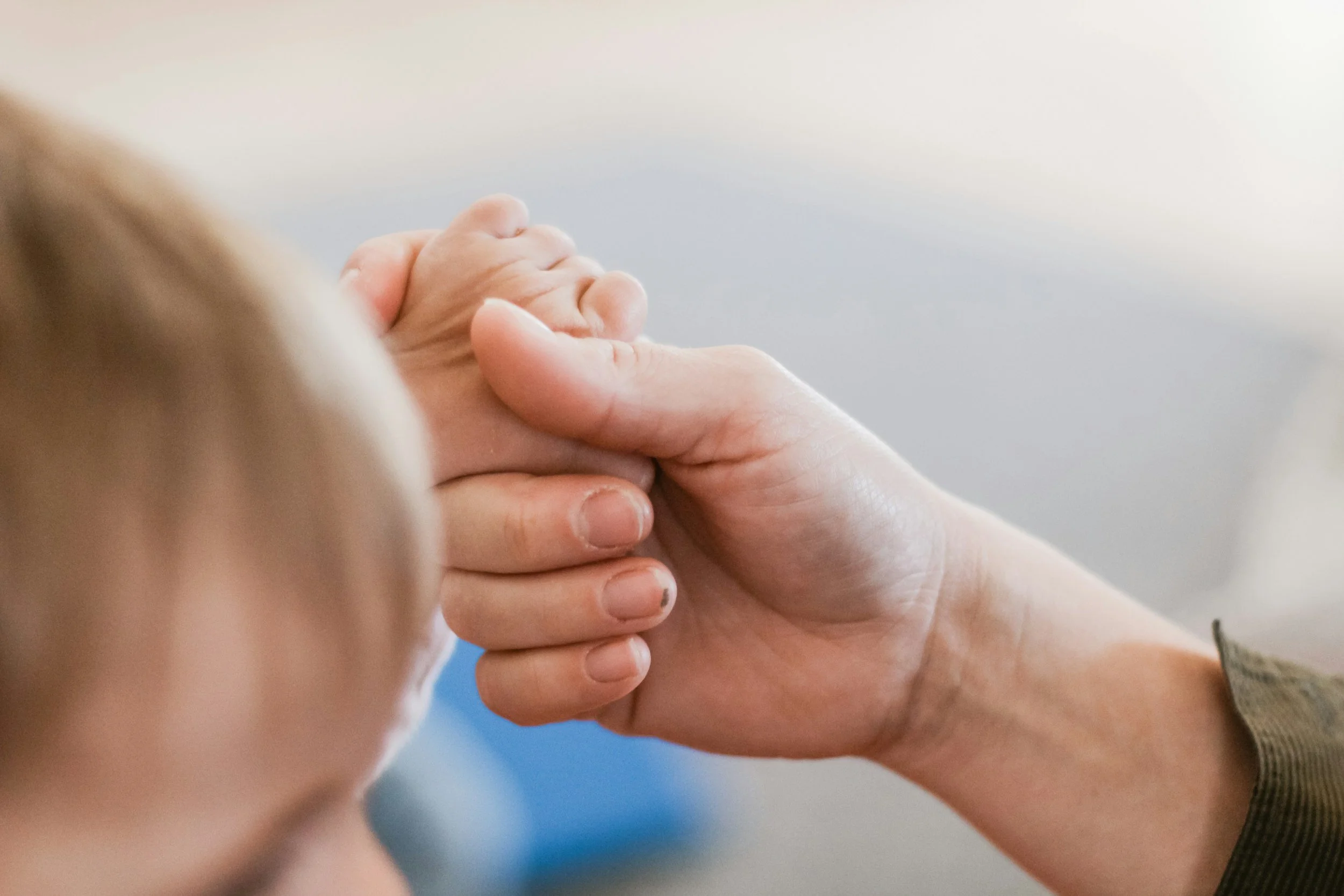
Shared attention is a cornerstone of early communication and social language. It is closely linked to emotional regulation and relational safety, as described in social-emotional regulation across early years: from newborn cues to preschool self-control.
2. Imitation in Play
Imitation is one of the earliest forms of communication.
Children who imitate:
Actions
Sounds
Facial expressions
…are showing readiness for expressive language.
Even copying a simple action (like banging a block) tells us the brain is learning how to map meaning.
3. Cause-and-Effect Play
Play that involves:
Pushing buttons
Dropping objects
Rolling balls
Making things happen
supports early understanding of communication: “When I do this, something happens.”
This same concept underlies first words and gestures.
4. Pretend and Symbolic Play
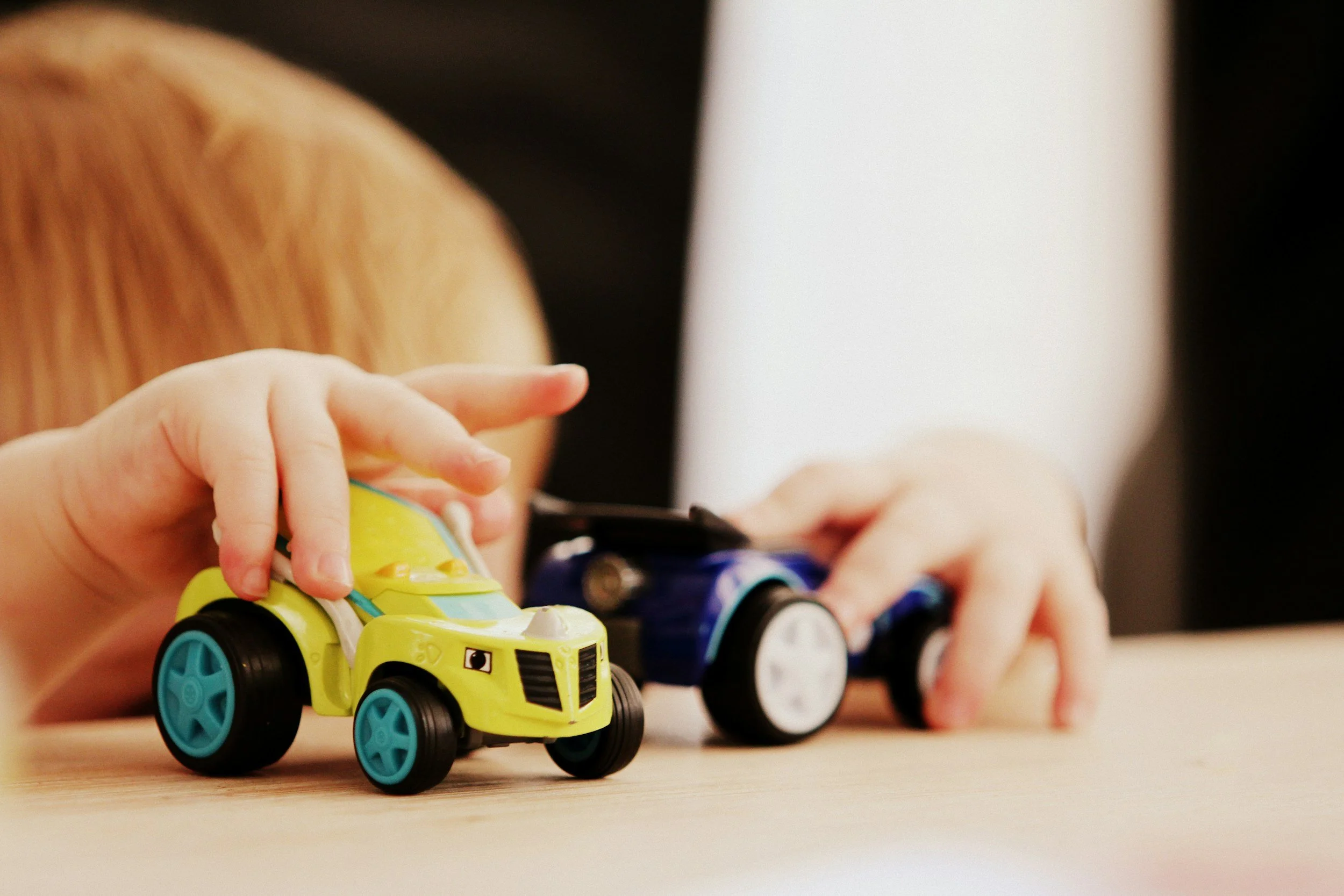
Pretend play—feeding a doll, driving a car, talking on a toy phone—signals a major leap in language development.
It shows the child can use one thing to represent another, a skill directly tied to word use and sentence formation.
5. Regulation During Play
A child’s ability to stay regulated during play matters.
Frequent meltdowns, avoidance, or quick disengagement may signal that sensory or emotional regulation is impacting communication.
In these cases, it’s important to look at the whole child, not just language output.
When Play Differences May Signal a Need for Support
Play differences don’t automatically mean a delay but they can provide valuable information.
Consider seeking guidance if a child:
Rarely engages with others during play
Repeats the same play pattern without variation
Avoids pretend play over time
Struggles to stay regulated during play
Has limited imitation or shared attention
These patterns often overlap with sensory processing, motor planning, or regulation challenges not just speech.
Practical Ways Parents Can Support Language Through Play
The good news? You don’t need special toys or drills. Small, intentional changes can have a big impact.
Follow the Child’s Lead
Choose play that your child is already interested in. When they feel safe and motivated, communication grows more naturally.
Narrate, Don’t Quiz
Instead of asking constant questions, describe what’s happening:
“You’re rolling the ball.”
“The car is going fast!”
This builds receptive language without pressure.
Build Turn-Taking Into Everyday Play
Simple back-and-forth actions—rolling a ball, stacking blocks—teach the rhythm of conversation long before words appear.
Use Repetition and Predictability
Repetitive songs, games, and routines help children anticipate what comes next, strengthening both understanding and expressive attempts.
Support the Body
Movement, oral exploration, and postural support all matter. If feeding, posture, or regulation feels challenging, it may be helpful to explore broader developmental connections like those discussed in whole-body development: how early oral function shapes your child’s growth.
A Therapist’s Perspective: Progress Is Often Subtle
One of the most important things I tell families is this: language growth often happens quietly before it becomes obvious.
A child may:
Stay engaged longer
Imitate more actions
Use more gestures
Show increased interest in people
These are meaningful signs of communication growth even before words appear.
**If you’re wondering whether your child’s play and communication patterns are developing as expected, you don’t have to figure it out alone.
When Professional Support Can Help
Pediatric occupational therapists and speech-language pathologists look at play as a primary assessment tool. Therapy may support:
Play expansion
Regulation and attention
Oral-motor foundations
Social engagement
Parent confidence
Families exploring options may also benefit from browsing your broader network of care.
-
Play supports language development by building shared attention, imitation, turn-taking, and symbolic thinking. These skills form the foundation for both understanding language and expressing words, gestures, and sentences.
-
Play that involves social interaction, imitation, cause-and-effect, and pretend play is especially important. These play patterns help children learn how communication works long before they begin speaking.
-
Yes. Some children show strong play and social engagement before spoken language emerges. These play skills are positive indicators that communication foundations are developing, even if words are not yet present.
-
It may be helpful to seek guidance if a child rarely engages with others during play, shows limited imitation, avoids pretend play over time, or becomes easily dysregulated during play. Persistent patterns matter more than isolated behaviors.
-
Yes. Language development is closely connected to posture, breath, sensory processing, and motor coordination. When the body feels regulated and organized, communication becomes easier and more efficient.
-
Occupational therapy can support language development by addressing regulation, sensory processing, play skills, and motor foundations that underlie communication. OT often works alongside speech therapy to support the whole child.
-
Parents can follow their child’s lead, narrate play without pressure, build turn-taking into simple games, repeat predictable routines, and support regulation through movement and connection.
-
Strong play skills are encouraging, but if concerns persist or daily routines feel challenging, a consultation can provide clarity. Early support helps families understand whether development is unfolding typically or would benefit from guidance.
Play is not just how children pass time but it is how they communicate before words.
By paying attention to play patterns, we gain early insight into language development and powerful opportunities to support growth in ways that feel natural and connected.
When we support play, we support communication.
And when we support the whole child, language has room to emerge.
Read more articles from us: