
Feed the Brain First: Why Protein at Breakfast and Balanced Snacks Matter for Kids

Mornings ask a great deal of a child’s developing brain and body.
Within a short period, children may need to wake up, get dressed, manage transitions, eat, separate from caregivers, participate at school or daycare, move their bodies, and respond to new sensory and social demands.
Nutrition is not the only factor that shapes how a child manages the day. Sleep, movement, sensory processing, relationships, temperament, and developmental needs all matter.
However, breakfast and snacks provide the energy and nutrients children need for growth, play, learning, and daily participation.
A breakfast that includes protein, carbohydrates, healthy fats, and fiber may be more satisfying than a meal made primarily from refined carbohydrates.
Rather than removing cereal, toast, waffles, fruit, or other familiar foods, families can often create a more balanced meal by adding something nourishing.
That is the central idea behind this article: We are not trying to create a perfect breakfast.
We are helping familiar foods provide more lasting nourishment.
Research generally supports eating breakfast compared with skipping it, particularly for tasks involving attention and memory.
However, studies comparing specific breakfast compositions have produced mixed results. Balanced meals are therefore best viewed as one practical part of supporting a child, not as a cure for attention, emotional, sensory, or behavioral challenges.
Why We Prioritize Protein in Children’s Meals
Protein supplies amino acids that the body uses to build and repair tissues, support normal growth, and produce important compounds involved in immune and physiological functions.
Children can receive protein from eggs, dairy products, meat, poultry, fish, beans, peas, lentils, tofu, nuts, seeds, and other foods.
Including a protein source at breakfast or snack time may help make the meal more substantial.
Protein-containing foods can also expand the range of nutrients offered throughout the day.
Depending on the food selected, a protein-rich meal may support:
Growth and tissue development
Muscle development and physical activity
Fullness between meals and snacks
A more varied nutrient intake
Participation in active play and daily routines
Immune and cellular functions
It is important not to overstate the immediate effects. A child who eats eggs or yogurt at breakfast will not automatically become calmer or more attentive.
Emotional regulation and attention are complex developmental functions. Nutrition can support the foundation, but it does not operate independently from sleep, sensory needs, relationships, movement, health, and learning differences.
Does Breakfast Affect Attention and Learning?
Breakfast provides energy after the overnight fasting period.
A systematic review of childhood breakfast studies found that eating breakfast was more consistently associated with benefits in attention, executive functioning, and memory than skipping breakfast, although results varied among children and studies.
Researchers have not reached equally firm conclusions about one ideal breakfast composition for every child.
This distinction matters.
We can reasonably encourage families to offer a nourishing breakfast without claiming that one food combination will prevent meltdowns, improve grades, or resolve attention challenges.
A balanced breakfast may help a child arrive at the day with:
Energy available for activity and learning
A more satisfying start than a small refined-carbohydrate snack alone
Opportunities to receive protein, fiber, fats, vitamins, and minerals
A predictable eating rhythm
For some children, eating immediately after waking is difficult.
A smaller “first breakfast” followed by a second food opportunity later may be more realistic than forcing a large meal.

Understanding the Grazing Cycle
Toddlers and young children have small stomachs and may need snacks between meals. The American Academy of Pediatrics notes that many toddlers need a morning or afternoon snack because they may not eat enough at one meal to comfortably reach the next.
The concern is not that children snack.
The concern is when food is available continuously, leaving little separation between eating opportunities. A day may begin to look like:
Crackers → fruit snacks → pouch → pretzels → granola bar → another pouch
When children graze throughout the day, they may reach meals without enough appetite to engage with the foods being served.
Families may then offer another preferred snack because the child ate very little, continuing the cycle.
Frequent, unstructured grazing can make it harder to establish:
Predictable hunger and fullness rhythms
Interest in family meals
Opportunities to explore new foods
A balanced range of nutrients
Clear meal and snack routines
This does not mean parents should make children wait when they are genuinely hungry.
It means creating predictable meals and nourishing snacks instead of expecting children to regulate themselves around food that remains available all day.
Parents navigating restricted eating or stressful mealtimes may also find our guide to sensory-based feeding differences helpful.
“Dress Your Carbs”: A Practical Way to Build Balanced Meals
Carbohydrates are an important energy source for growing children. Fruit, oats, bread, rice, potatoes, pasta, cereal, and other carbohydrate-containing foods do not need to be feared or eliminated.
Instead, try asking:
What can I add to make this food more satisfying?
At BWell Tots, we often call this dressing your carbohydrates.
The basic idea is simple:
Carbohydrate:readily available energy
Protein:amino acids and greater meal substance
Fat:concentrated energy and support for growth
Fiber:digestive support and additional meal structure
For babies and young toddlers, fats are especially important for normal growth and development. Food choices and portions should always be appropriate for the child’s age, medical history, allergies, and feeding abilities.
Easy Ways to Dress Familiar Carbohydrates
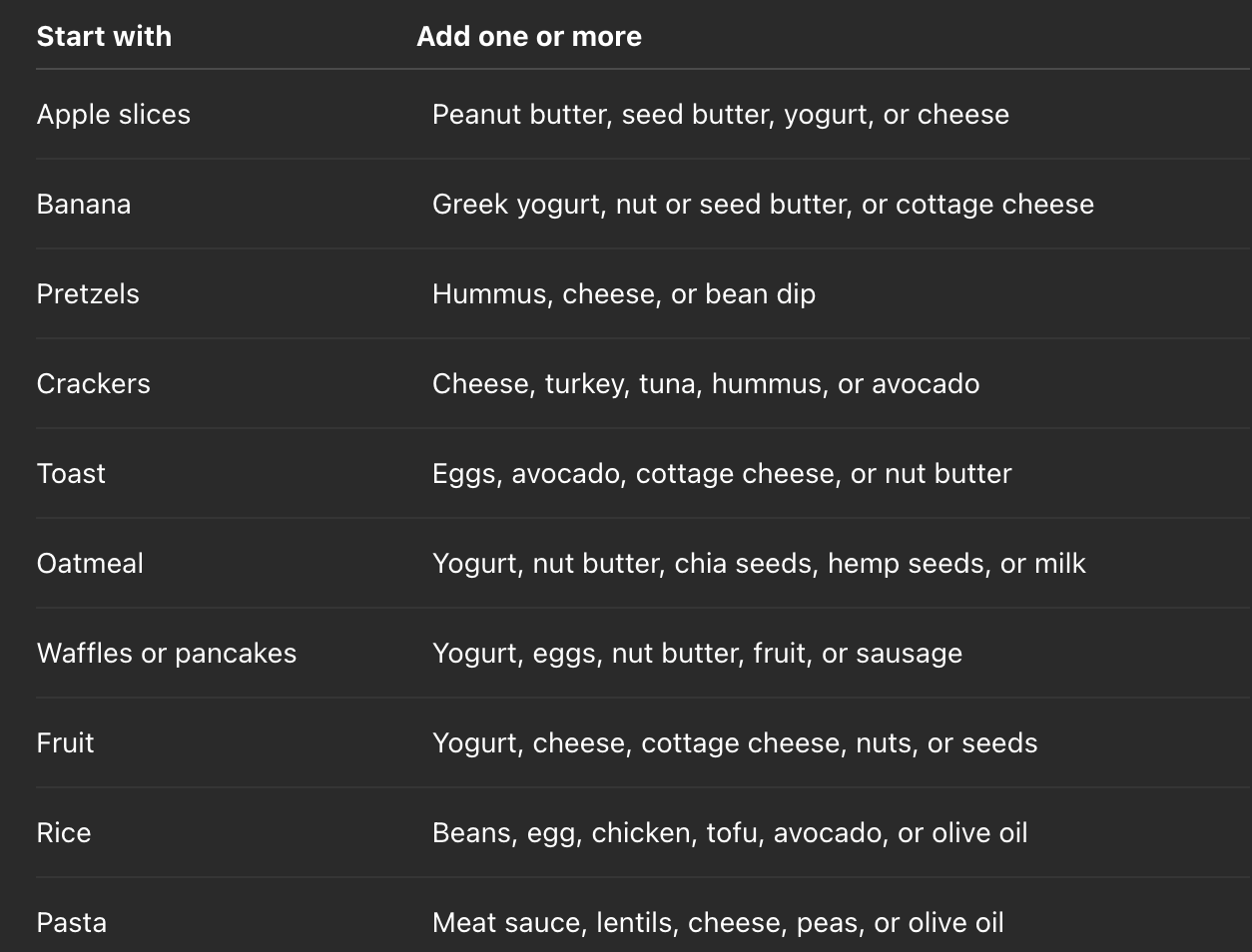
Use only foods that are safe for your child’s developmental level.
Whole nuts, spoonfuls of nut butter, popcorn, hard raw foods, and other choking hazards may not be appropriate for young children.
Modify textures and supervise eating according to pediatric feeding-safety guidance.
Protein-Rich Breakfast Ideas for Children
Breakfast does not have to look like a traditional breakfast.
Families can use familiar foods, leftovers, or a combination of small items.
Options include:
Scrambled eggs with toast and fruit
Greek yogurt with berries and chia seeds
Cottage cheese with soft fruit
Oatmeal prepared with milk and topped with nut or seed butter
A breakfast burrito with eggs, beans, cheese, or avocado
Toast with peanut or seed butter and banana
Turkey or chicken sausage with fruit and whole-grain toast
A smoothie made with yogurt, fruit, and an age-appropriate fat source
Leftover chicken, meatballs, beans, chili, rice, or vegetables
Tofu scramble with toast
Hummus with soft pita and fruit
Cheese, fruit, and whole-grain crackers
Protein powder is not automatically necessary for children.
Speak with your pediatrician or a pediatric dietitian before regularly adding supplements, especially when a child has allergies, digestive concerns, restricted eating, kidney or metabolic conditions, or other medical needs.
A Simple Formula for Children’s Meals and Snacks
You do not need to count every nutrient or create a complicated meal plan.
For many families, this simple formula is enough:
At a meal
A carbohydrate or produce option
A protein source
A fat source when appropriate
Water or the child’s usual beverage
At a snack
Try pairing two food groups:
Fruit + yogurt
Crackers + cheese
Toast + nut or seed butter
Pretzels + hummus
Banana + cottage cheese
Berries + yogurt
Vegetables + bean dip
Whole-grain muffin + milk
Balanced snacks can help children receive useful nutrients between meals without turning the day into continuous grazing.
Save this simple question for your next grocery trip:
What protein, fat, or fiber-rich food can I pair with this carbohydrate?
What If My Child Refuses Protein Foods?
Many children prefer carbohydrates because they are predictable in appearance, texture, and flavor.
Crackers are usually the same every time. Meat, eggs, vegetables, and mixed foods may vary more from bite to bite.
A refusal does not necessarily mean the child is being difficult.
Consider whether your child may be responding to:
Texture
Smell
Temperature
Chewing effort
Oral-motor demands
Food presentation
Fear following a past gagging or vomiting experience
A strong preference for predictability
Helpful approaches may include:
Serving a familiar food alongside a learning food
Offering very small portions
Avoiding pressure to taste or finish
Allowing safe sensory exploration
Using family meals for modeling
Repeating exposure without forcing consumption
Trying different preparations of the same protein
For example, a child may reject scrambled eggs but tolerate French toast, an egg muffin, or a small amount of egg inside another familiar recipe.
If your child eats a very narrow range of foods or experiences distress around eating, read our guide to picky eating and more complex feeding challenges.
How Nutrition Fits Into Nervous-System Support
Food matters, but food is one part of a larger developmental picture.
A child may have difficulty focusing, transitioning, or regulating because they are hungry.
The same behaviors can also appear when a child is:
Overtired
Sensory overloaded
Anxious
Experiencing pain or constipation
Managing communication challenges
Adjusting to a change in routine
Seeking movement or deep pressure
Coping with an environment that exceeds their current capacity
Balanced meals can support the body, but parents should not feel responsible for solving every behavior through food.
A whole-child approach also considers:
Sleep quality
Predictable routines
Movement
Sensory input
Connection
Medical needs
Feeding skills
Emotional and developmental support
Explore five sensory strategies to try before breakfast for practical ways to combine morning nutrition with movement and nervous-system preparation.
You may also find family routines that support calmer, more predictable days helpful when creating structured meal and snack times.
If your child has a very limited diet, avoids entire food groups, gags frequently, or experiences significant distress at meals, generalized nutrition tips may not be enough.
During a consultation, families can discuss feeding patterns, sensory preferences, oral-motor concerns, mealtime routines, and which type of provider may be the best fit.
When to Seek Professional Nutrition or Feeding Support
Contact your child’s pediatrician or an appropriately qualified feeding or nutrition professional when you are concerned about:
Growth or weight changes
Nutrient deficiencies
Fatigue, weakness, or persistent low energy
Fewer accepted foods over time
Avoidance of entire food groups
Coughing, choking, or breathing changes during meals
Frequent gagging or vomiting
Pain with eating
Chronic constipation
Fear or panic around food
Reliance on nutritional drinks or supplements
Family meals becoming consistently distressing
Feeding challenges can involve nutrition, sensory processing, swallowing, oral-motor development, medical conditions, learned fear, or several factors at once.
The appropriate team may include a pediatrician, registered dietitian, occupational therapist, speech-language pathologist, gastrointestinal specialist, psychologist, or other provider.
Not sure whether your child needs feeding therapy, nutrition support, occupational therapy, or another service?
The BWell Tots Perspective

The goal is not to eliminate carbohydrates, monitor every bite, or create a nutritionally perfect plate.
The goal is to offer a supportive rhythm in which children have repeated access to foods that help them grow.
Instead of asking:
“Should I take this carbohydrate away?”
Try asking:
“What can I place beside it?”
A cheese stick with crackers, yogurt with fruit, hummus with pretzels, or peanut butter with toast may seem like a small adjustment. Small, repeatable changes are often more sustainable than a complete overhaul.
Nutrition works best when it is paired with emotional safety, realistic expectations, responsive feeding, movement, sleep, connection, and respect for each child’s developmental needs.
Feed the brain, fuel the body, and support the nervous system—one meal at a time.
-
Protein supplies amino acids needed for growth, tissue repair, immune functions, and normal body processes.
Including a protein food can also make breakfast more substantial and expand the meal’s nutrient variety.
-
Breakfast consumption may support some aspects of attention and memory compared with skipping breakfast, but research has not established one ideal breakfast composition for every child.
Attention is also influenced by sleep, development, sensory needs, health, and the learning environment.
-
Depending on the child’s preferences and safety needs, options may include yogurt, cheese, eggs, nut or seed butter, hummus, beans, tofu, milk, cottage cheese, poultry, meat, or fish. Offer familiar foods alongside new options without pressure.
-
Snack needs vary by age, appetite, activity, meal timing, and growth. Many toddlers eat three meals plus one or two planned snacks. A pediatrician or dietitian can provide individualized guidance.
-
Occasional flexibility is normal.
However, continuous access to food can reduce appetite at meals and make hunger and fullness patterns harder to recognize.
Predictable meals and snacks may help children arrive at eating opportunities with an appropriate appetite.
-
It means pairing a carbohydrate with a protein, fat, or fiber-rich food. Examples include fruit with yogurt, crackers with cheese, toast with egg, or pretzels with hummus.
-
Not automatically. Carbohydrates are an important energy source.
Emotional regulation and attention are complex, and removing foods without professional guidance can create unnecessary restriction.
Focus on balanced pairings and speak with your child’s pediatrician or dietitian about individual concerns.
-
Consider professional guidance when a child’s food range continues to narrow, growth or nutrition is affected, eating causes significant fear or distress, meals disrupt family life, or coughing, choking, pain, vomiting, or swallowing concerns are present.