
It's 7:42 a.m. One shoe is on. Your child is lying upside down on the couch, humming, while you repeat "shoes, please" for the fifth time. Two minutes later, a sock seam feels "wrong" and the whole morning tips into tears, theirs and maybe yours.
If this sounds familiar, I want you to hear this first: your child isn't being bad, and you aren't failing. What you're often seeing isn't a lack of attention. It's a nervous system that's working really hard to stay regulated.
Attention Is Only Part of the Picture
When we hear "ADHD," most of us think of focus. But in my work as an occupational therapist, I see attention as something that sits on top of regulation. Regulation is the body's ability to shift into the right state for the moment: calm enough to listen, alert enough to engage, and able to recover after something hard.
When a child's body is still working on that foundation, attention is often the first thing to slip. Their brain is busy managing movement, sensation, and alertness, so there's less left over for the spelling list or the dinner table.
The hopeful part is that regulation is a skill, and skills can be built.
What Regulation Looks Like Day to Day
Regulation doesn't look like a perfectly still child. It looks like:
- Getting wiggly, then being able to settle with a little movement
- Getting frustrated, then coming back to the task
- Moving from playtime to bathtime without a total collapse
- Knowing (or learning) what their body needs: a squeeze, a snack, a break
If you'd like a deeper dive into those "too much" and "shut down" moments, our post on the Window of Tolerance is a great companion to this one.
Signs Your Child's Regulation May Need Support
You might notice:
- Constant movement: crashing, climbing, spinning, or never sitting for long
- Big reactions to small changes, or long recovery after upsets
- Trouble with transitions (leaving the park, starting homework)
- Slumping, leaning, or propping their head up at the table
- Losing their place when reading, or avoiding copying from the board
- Seeming "checked out" or exhausted after school
- Clumsiness or effort with coordination
None of these on their own mean something is wrong. They're clues about where your child's body may need more support.
The Foundations We Look At
Reflex integration
Babies are born with primitive reflexes, automatic movement patterns that help them through birth and early development. Over time, these are meant to quiet down as more mature, intentional movement takes over. When some stick around, a child may have to work harder to sit still, stay balanced, or coordinate both sides of the body. That extra effort can show up as fidgeting, fatigue, or frustration. We dig into this more in our post on DCD, coordination, and retained reflexes.
In therapy, reflex integration looks like play: specific, rhythmic movements on the floor that can support the body in building more mature patterns.
Oculomotor (eye movement) skills
Our eyes don't just see; they track, shift, and team together. A child who can see clearly can still find it hard to follow a line of text, track a ball, or shift their gaze from the board to their paper. When eye movements take extra effort, kids often look away, lose focus, or get tired fast, which can look a lot like "not paying attention." Oculomotor work, like tracking a moving toy or playing catch with a balloon, can support smoother, easier looking.
Heavy work
Heavy work is any activity that pushes, pulls, lifts, or carries, giving the muscles and joints strong input (proprioception). For many kids, this input is deeply organizing; it can support a calmer, more ready-to-learn body. Here's more on why kids crave movement and heavy work.

Nervous system basics
Sleep, nutrition, breathing, and connection with a safe adult are the base everything else sits on. A well-fed, rested child with a co-regulating grown-up nearby has a lot more capacity to work with.
Simple Ideas to Try at Home
Keep these playful and short. Watch how your child responds, and follow their lead.
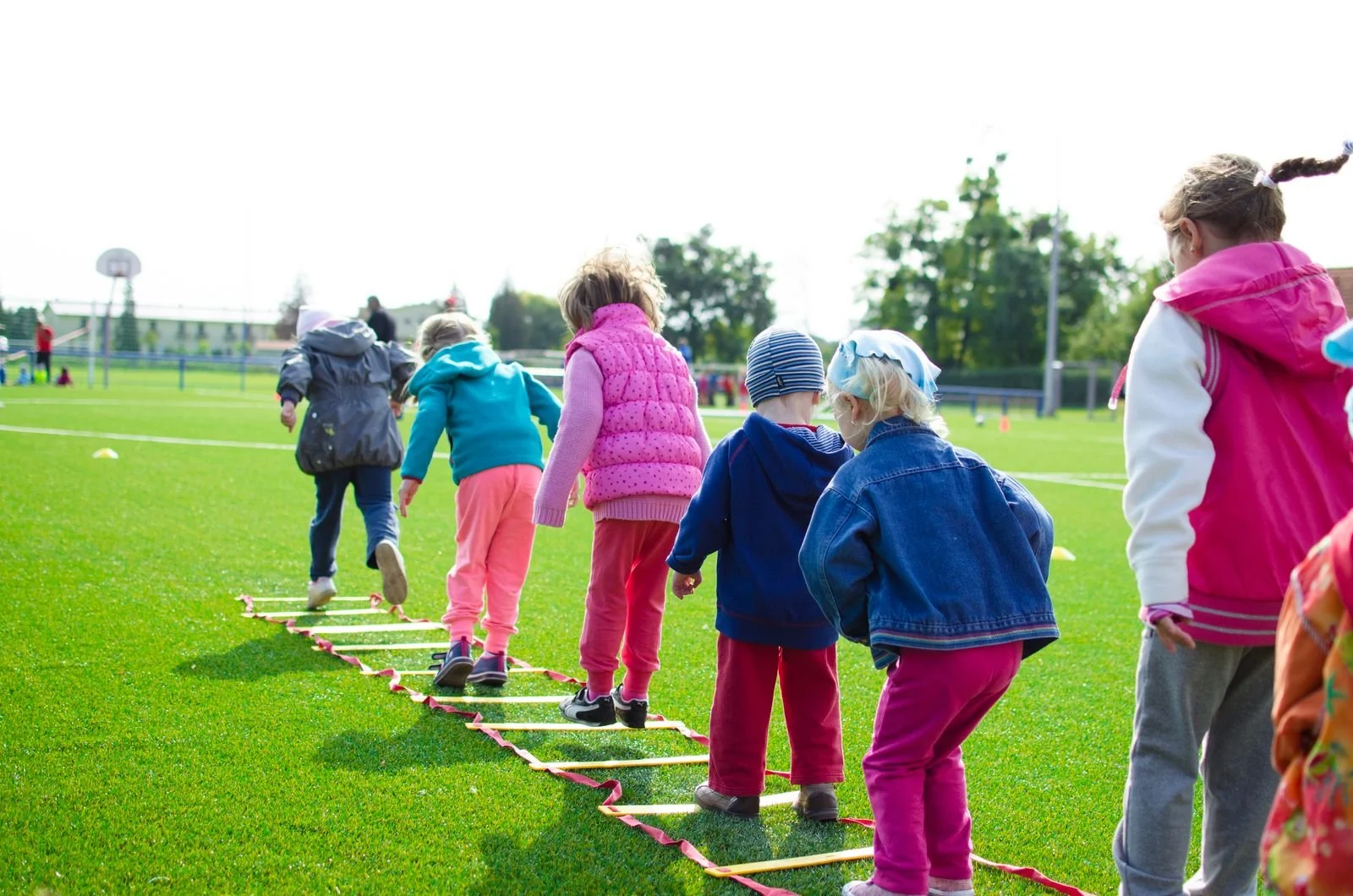
- Morning heavy work: Have them carry the laundry basket, push a loaded stroller or wagon, or do "wall pushes" before school.
- Animal walks: Bear crawls, crab walks, and frog jumps down the hallway.
- Tummy time for big kids: Read, draw, or do puzzles lying on their belly, propped on elbows.
- Flashlight tag: Turn off the lights and have your child follow your flashlight beam on the wall with their eyes (head still, if they can).
- Balloon volleyball: Slow-moving balloons are great for tracking and coordination.
- Crawling tunnels: Couch-cushion obstacle courses that include crawling on hands and knees.
- Transition helpers: Before a hard transition, try a big bear hug, a few jumps, or carrying something heavy to the next spot.
- Calm-down breathing: Blow a cotton ball across the table with a straw, or "smell the flower, blow out the candle."
- Crunchy or chewy snacks: Apples, carrots, or a smoothie through a straw can be organizing input for the mouth.
If something makes your child more wound up, that's useful information too. Every nervous system is different.
How We Can Support Your Family
At B.well tots, our OTs look at the whole child: reflexes, eye movements, sensory processing, motor skills, and the everyday routines that matter to your family. Then we build a plan that's playful, practical, and something you can carry into your home. You'll leave with tools, not just a to-do list.
Support Close to Home in Philadelphia
We see families at our three offices: Fishtown (2011 N. Front St.), Fairmount (2000 Hamilton St., Ste 304), and Wyndmoor (1100 E. Mermaid Lane). For families who want more focused support in a shorter window, we also offer Neuro.well intensives, which bring reflex, oculomotor, and regulation work together.
Not sure where to start? Let's talk it through together.
This post is for educational purposes and isn't a substitute for individualized medical advice.